
Our Structures
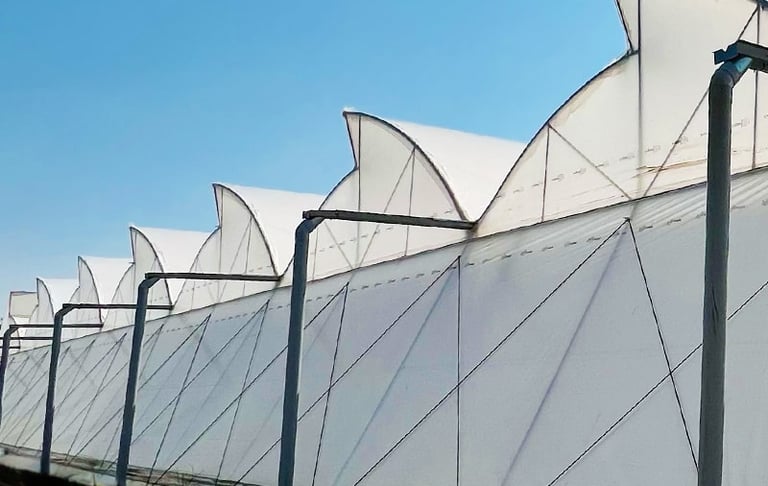
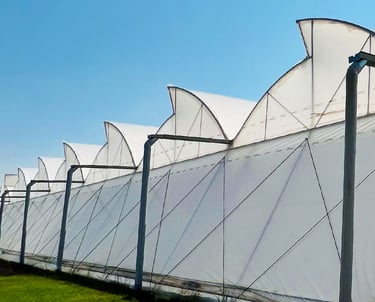
Naturally Ventilated Polyhouse
Relies on natural airflow through side and top vents, reducing electricity and maintenance costs. Ideal for vegetables, flowers, and nurseries in moderate climates. Maintains temperature and humidity naturally, improving crop quality. Low operational cost makes it farmer-friendly and economical. Widely eligible for government subsidies under NHM/MIDH schemes. Suitable for small to medium-scale protected cultivation. Easy to install and scalable as per land size.
Fan-Pad Polyhouse
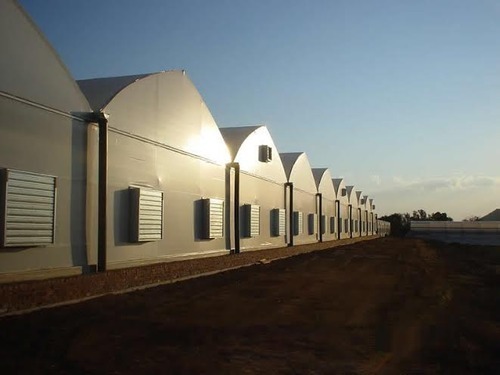
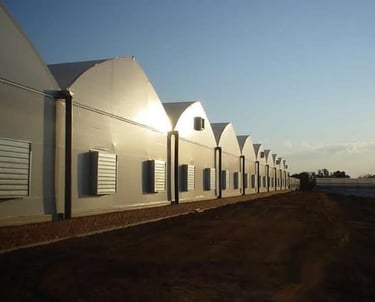
Uses exhaust fans and cooling pads for precise temperature control. Best suited for high-value crops and extreme hot-climate regions. Ensures uniform cooling and higher yield consistency. Higher initial cost but delivers premium-quality production. Actively supported under government subsidy programs for hi-tech farming. Recommended for commercial and export-oriented farming. Enables year-round cultivation with controlled environment.
Dome Type Shade Net House
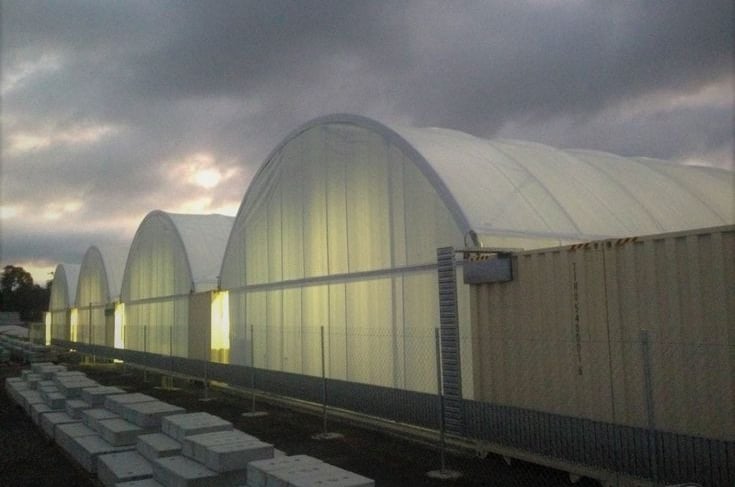
Dome-shaped structure offers better wind resistance and durability. Used mainly for nurseries, hardening plants, and shade-loving crops. Protects crops from excess sunlight, pests, and harsh weather. Lower cost compared to polyhouses, with minimal maintenance. Covered under subsidy schemes for shade net cultivation. Improves survival rate of seedlings and young plants. Suitable for both temporary and semi-permanent use.
Flat Net House
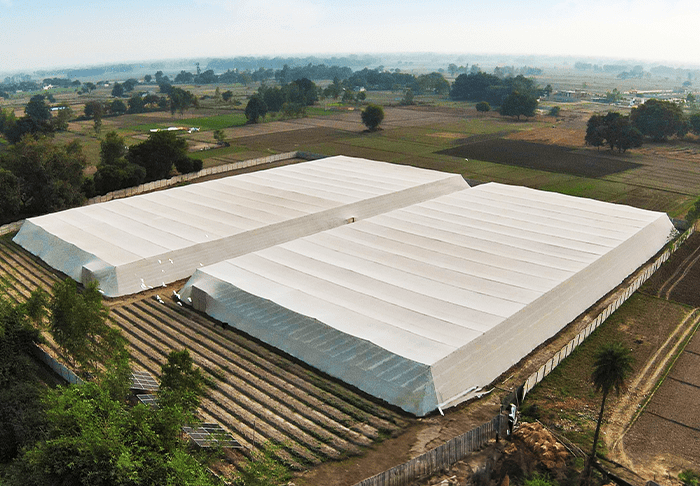
Flat-roof design allows easy construction and cost efficiency. Commonly used for vegetable cultivation and nursery activities. Provides effective protection from insects and birds. Improves crop quality while reducing pesticide usage. Supported by government subsidies for protected farming structures. Ideal for large-area coverage at lower investment. Simple design ensures easy repair and modification.
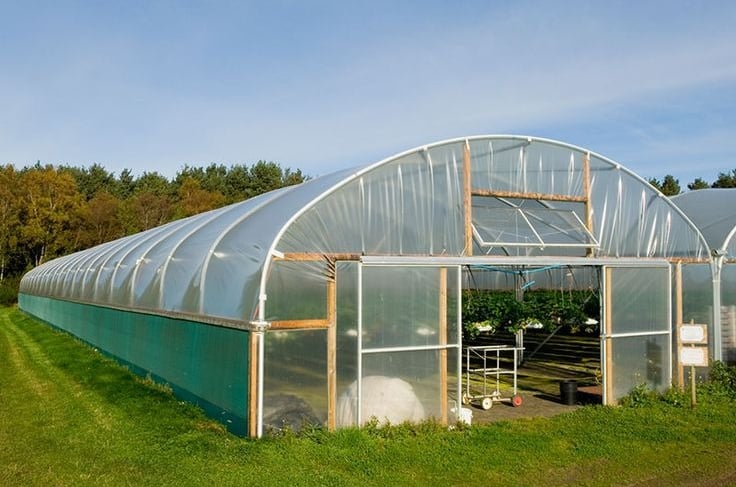
Poly Tunnel House
Semi-cylindrical structure made with GI pipes and UV film. Best for seasonal vegetable and flower cultivation. Quick installation with comparatively low investment. Helps in early crop production and higher market prices. Eligible for subsidies in many state horticulture programs. Suitable for marginal and small farmers. Enhances crop protection during adverse weather conditions.